If you’ve asked a landscape designer for a consultation lately, you’ve probably noticed a pattern: the same handful of features keep coming up. Homeowners aren’t just asking for a “nicer backyard” anymore — they’re asking for outdoor kitchens, fire features, shade structures, and low-maintenance planting by name. Here’s what’s actually topping request lists in 2026, what each feature costs, and how to prioritize them for your yard and budget.
Key Takeaways
- Outdoor kitchens, fire pits/fireplaces, and shade structures are the three most-requested features in 2026, according to industry-wide trend data from Houzz, Trex, and System Pavers.
- Nearly 60% of U.S. homeowners plan to invest in their outdoor space this year, and 77% say they want to spend more time outside.
- Low-maintenance, drought-tolerant landscaping is now a top priority alongside aesthetics — not an afterthought.
- Outdoor kitchens can return 55%–150% of their cost at resale, especially in warm-climate markets like Southern California, Arizona, and Nevada.
- At Harmony Landscape Design, we combine these 2026 trends with 3D renderings so you can see exactly how each feature fits your yard before you commit a budget to it.
Why Outdoor Upgrades Are Surging in 2026
Outdoor living has stopped being a seasonal nice-to-have and become a seamless extension of the home, with outdoor spaces planned to function like natural continuations of the indoors. Industry research backs this up: nearly 60% of U.S. homeowners plan to invest in their outdoor space this year, and 77% say they simply want to spend more time outside. The 2026 Houzz Outdoor Trends Study, which surveyed close to 1,200 homeowners currently renovating or planning an outdoor project, found that personal enjoyment — not resale value — is now the leading motivator for most projects, a shift from prior years.
Homeowners are also investing in year-round usability for outdoor spaces. That shift matters for how you plan. Homeowners are no longer chasing trends for trend’s sake; they’re requesting features that get used every single day: a place to cook, a place to sit by the fire, a shaded spot that doesn’t bake in the afternoon sun. Here’s the breakdown, feature by feature.
The Top Outdoor Features Homeowners Are Requesting
1. Fully-Equipped Outdoor Kitchens
Outdoor kitchens have moved well past a grill and a side table. Houzz’s 2026 data shows the overwhelming majority of outdoor kitchen projects now include a grill, and homeowners increasingly prefer multi-functional outdoor kitchens with more advanced features for entertaining and everyday cooking. Built-in cabinetry and storage saw the single biggest jump in popularity of any feature category this year, and most projects now include infrastructure work — plumbing, electrical, or heating — rather than a simple bolt-on unit. In fact, 59% of outdoor kitchen designs include sinks.
This is also one of the highest-return features you can add. Depending on your market and how built-out the kitchen is, homeowners typically recoup 55%–150% of the cost at resale, with the highest returns showing up in warm-climate states where the space gets used nearly year-round.
What it typically costs: Most fully finished outdoor kitchens run $10,000–$27,000, though basic setups start closer to $5,000 and premium custom builds can exceed $50,000.
2. Fire Pits and Outdoor Fireplaces
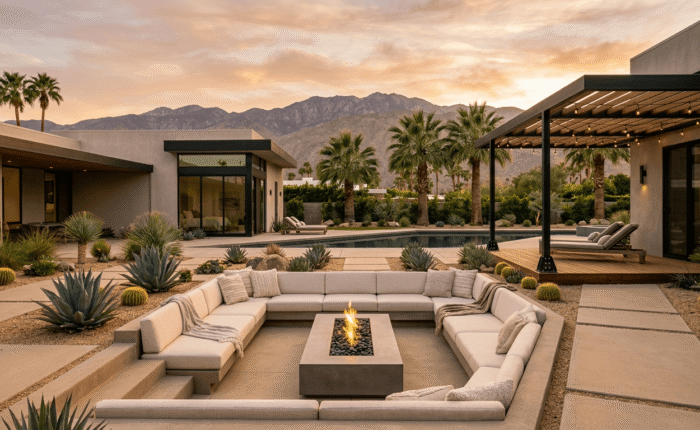
Fire features remain one of the most requested, and most emotionally driven, additions to any yard, and fire pits often serve as year-round gathering points for families. Design professionals consistently point to the simple appeal of a crackling fire as a proven way to create a relaxing atmosphere and turn a patio into a gathering spot that works well past sunset. Paired with layered lighting, a fire feature often becomes the anchor point of the whole backyard design.
Natural stone surrounds are also a popular design choice for fire pits.
If you’re deciding between a fire pit and a full fireplace, it usually comes down to budget and how central you want the feature to be: fire pits are more affordable and flexible, while built-in fireplaces create a stronger architectural focal point and help extend outdoor use into spring and fall.
3. Shade Structures and Covered Patios
After decks, a shade feature is now the most requested structural upgrade nationally — and its popularity jumped significantly compared to just two years ago. Pergolas, covered patios, retractable awnings, and gazebos all fall into this category, and for good reason: they provide shade and extend the number of hours a space is actually usable, especially in hot-summer climates. Covered outdoor structures also protect against diverse weather conditions.
Many 2026 covered-patio requests go a step further, adding built-in fans, integrated lighting, and retractable screens so the space functions as a true extension of the house.
4. Layered Outdoor Lighting
Lighting has quietly become one of the smartest investments a homeowner can make. Two-thirds of outdoor lounge areas now include lighting, and designers describe it as one of the highest-impact, lowest-cost upgrades available — it extends usable hours into the evening, highlights architectural and plant features, and improves safety on paths and steps.
The 2026 shift is toward layered lighting — ambient, task, and accent light working together — rather than a single floodlight, plus a move toward tunable smart fixtures that adjust color temperature for mood.
5. Low-Maintenance, Drought-Tolerant Landscaping
Low maintenance is no longer a compromise — it’s a top-line request. Industry surveys show eco-conscious landscaping ranks as a top priority for a strong majority of homeowners planning outdoor renovations, right behind aesthetics. That’s translating into a measurable shift away from traditional lawns: natural grass lawn replacement has dropped several points in the past two years, while homeowners are increasingly replacing grass lawns with ground covers, hardscape, mulch, garden beds, and synthetic lawn to reduce upkeep and create spaces that support ecological health and beauty.
Native and drought-tolerant planting is doing double duty here — it cuts water use and maintenance time while still delivering the layered, colorful look homeowners want. The EPA’s WaterSense program notes that outdoor water use accounts for nearly 8 billion gallons a day nationally, mostly for irrigation, which is a big part of why water-smart landscaping has moved from a niche request to a mainstream one. (If you’re weighing whether this pays off long-term, we’ve broken down the full ROI picture in our landscaping and home value guide.)
6. Multi-Zone “Outdoor Rooms”
Instead of one open lawn, homeowners are requesting yards divided into purposeful zones — a dining area, a lounge, a garden, sometimes even an outdoor workspace. This flexibility lets a single backyard serve completely different functions throughout the day, from a quiet morning coffee spot to a full entertaining space by evening. Materials, paving patterns, and lighting are used to define each zone without needing walls or fences to separate them. The National Association of Landscape Professionals has flagged this same shift toward smaller, more intimate “outdoor rooms” as one of the defining design trends of 2026.
7. Water Features
Fountains, small ponds, and reflection pools are making a strong comeback in 2026, often paired with soft lighting for a calming nighttime setting. Beyond aesthetics, designers point to a genuine wellness angle: moving water creates a natural sound buffer and a more restorative environment, which fits the broader 2026 trend toward backyards as retreats rather than just entertaining spaces.
8. Privacy Features
As lot sizes shrink in many markets, privacy features in outdoor spaces are gaining importance and have become their own design category rather than an afterthought. Pergolas, screens, and composite fencing are increasingly built specifically to create defined, private zones and organize exterior spaces, not just to mark a property line. These features do double duty, adding both separation from neighbors and visual structure to the overall design.
9. Wellness-Focused Retreats
One of the more notable shifts in 2026 is homeowners requesting dedicated wellness space as part of a calmer, more restorative outdoor environment: small soft-turf areas for yoga, quiet pergola-shaded reading nooks, and, increasingly, cold plunge pools and reflection ponds. Outdoor showers are also emerging as a wellness feature that supports private, nature-connected daily routines. Landscape professionals describe rising demand for smaller, higher-end pools built around recovery and relaxation rather than laps or large-group swimming. The common thread is intentional, personal space, even if it’s just a single comfortable chair tucked into a green nook.
10. Smart Irrigation and Connected Tech
Smart irrigation — drip systems with timers and sensors — is one of the easiest tech upgrades to justify, since it protects a homeowner’s plant investment while cutting water waste. It’s frequently paired with smart lighting as the two “start here” tech additions designers recommend, since both offer a high impact for a relatively modest investment.
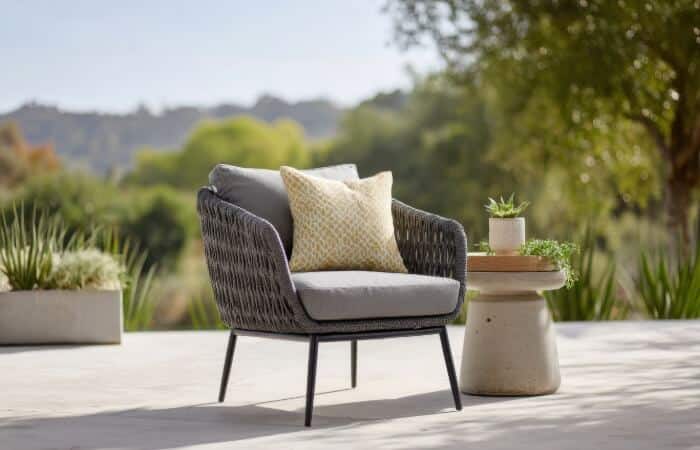
Regional Spotlight: What Southwest Homeowners Are Requesting Most
Because Harmony Landscape Design works with clients across Los Angeles, Palm Springs, Palm Desert, Irvine, Scottsdale, and Henderson, we see a distinct regional pattern in backyard landscaping and other outdoor areas layered on top of the national trends above. In hot, dry climates, three requests come up more than anywhere else:
- Shade is non-negotiable. In Palm Springs, Palm Desert, and Scottsdale especially, covered patios and pergolas aren’t a style choice — they’re what makes a backyard usable from May through September.
- Drought-tolerant and desert-adapted planting leads the plant list. Homeowners across the Coachella Valley and greater Phoenix area are increasingly requesting modern desert landscape design that stays lush-looking without the water bill of a traditional lawn, and many choose native or desert-adapted plants for less upkeep and stronger performance.
- Outdoor kitchens get heavier use — and higher ROI. Because these yards are usable nearly year-round, outdoor kitchens in Southern California, Arizona, and Nevada tend to land at the higher end of the 55%–150% ROI range compared to colder-climate markets.
Cost and ROI at a Glance
| Feature | Typical Cost Range (2026) | Resale ROI |
| Outdoor kitchen | $10,000–$27,000 | 55%–150% |
| Fire pit | $1,500–$5,000 | Strong — boosts usability & appeal |
| Covered patio / pergola | $1,450–$22,500 | Strong — extends usable months |
| Layered outdoor lighting | $80–$300 per fixture | ~50%–60% direct, higher indirect impact on showings |
| Drought-tolerant landscaping | Varies by scope | Lower water/maintenance cost over time |
| Water feature | Varies by scope | Moderate — mostly lifestyle value |
| Smart irrigation | $4,000–$8,000 (full system) | ~83% |
Costs are general 2026 industry ranges and will vary by region, materials, and scope. Choosing durable, warm natural materials that age gracefully can also add long term value to the project. For a number specific to your property, start a free consultation.
How to Prioritize These Features for Your Budget
Trying to add everything on this list at once is how backyard projects blow their budgets. A better approach:
- Start with structure and shade. Patios, decks, and shade features are the foundation everything else builds on, and they shape first impressions and curb appeal as much as function — add these first.
- Layer in the features you’ll use daily. For most homeowners, that’s a fire feature or an outdoor kitchen, not a water feature.
- Handle planting and irrigation together. Drought-tolerant landscaping and smart irrigation are designed to work as a pair to reduce maintenance and protect long-term performance — installing them separately usually costs more in the long run.
- Save wellness and water features for last, unless they’re the entire reason you’re renovating. They add the most personality but the least universal resale value.
Working With Harmony Landscape Design
At Harmony Landscape Design, our landscape architect, principal designer, and lead designer help homeowners turn a list like this one into an actual plan for outdoor spaces that feel like an extension of indoors. Every project starts with a simple online questionnaire, moves into a custom 3D design within two weeks, and includes thoughtful planning plus guidance connecting you with trusted contractors to bring it to life.
Whether you’re focused on a front yard refresh, a full backyard transformation, or a complete full yard design, we can help you prioritize which 2026 features are actually worth it for your space, with lower-effort choices that protect your free time and create functional garden features tailored to your property’s lifestyle.
FAQ
What Is the Most Requested Outdoor Feature in 2026?
Outdoor kitchens and fire features top most industry surveys, followed closely by shade structures. Nationally, a shade feature is now the second most requested structural upgrade after decks.
What Outdoor Feature Adds the Most Value to a Home?
Outdoor kitchens tend to deliver the strongest ROI, recouping 55%–150% of their cost at resale, with the highest returns in warm-climate markets where they get used nearly year-round.
Are Low-Maintenance Yards Actually in Demand, or Just a Marketing Trend?
It’s a real, measurable shift. Traditional lawn replacement with natural grass has declined several percentage points over the past two years as homeowners move toward hardscape, native planting, edible plants, and synthetic turf, with some spreading varieties able to produce new plants on their own over time.
How Much Should I Budget for a Backyard Update with 2–3 of These Features?
For a mid-range project combining a patio, a fire feature, and updated lighting, many homeowners budget $15,000–$35,000. Larger projects that add a full outdoor kitchen, pool-adjacent wellness space, or retaining walls as part of the layout can run well beyond that. A design consultation is the fastest way to get a number specific to your yard.
Do These Trends Apply to Smaller Yards, Too?
Yes. Multi-zone design, privacy screening, and shade structures are especially popular in smaller lots right now, since they let a compact yard function like several distinct spaces without feeling cramped.
How Long Does It Take to Plan and Design These Features?
At Harmony Landscape Design, you’ll receive your first custom 3D design draft within 2 weeks of starting your project, so you can see how these features look in your actual yard before committing to a build.
Written by: Shir Amram

Shir Amram is the Founder and Lead Landscape Designer at Harmony Landscape Design. She specializes in modern landscape design, 3D outdoor renderings, planting plans, and full-property planning for homeowners nationwide. Her design process helps clients visualize their outdoor space before construction begins, creating clarity and confidence in every project.