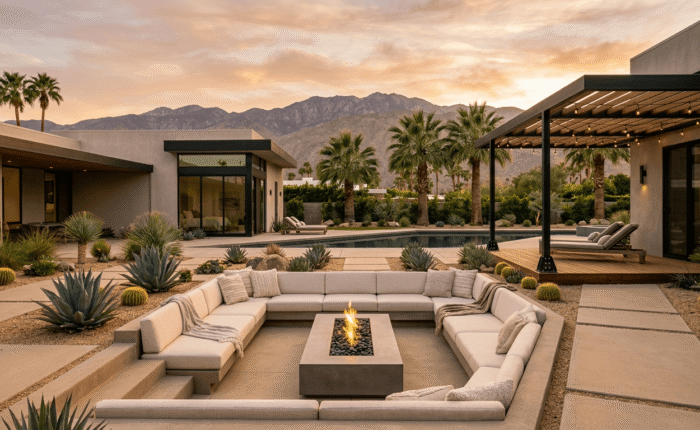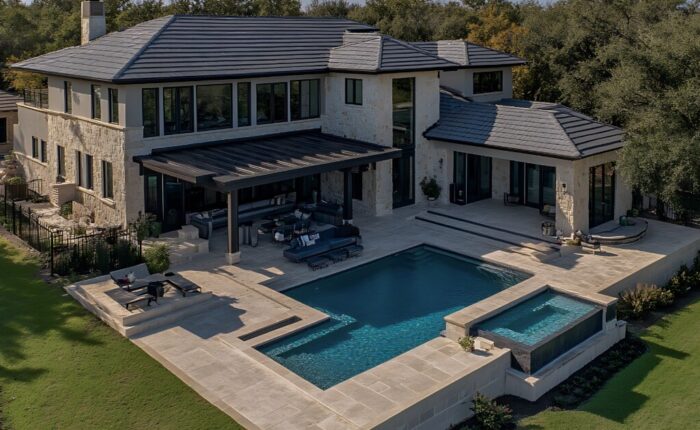
Transform Your Outdoor Space with Desert Landscape Design Ideas
Designing a beautiful yard in a dry climate doesn’t mean sacrificing style. With the right approach, desert landscape design can create a stunning, low-maintenance outdoor space that thrives year-round while using minimal water. Desert landscape design is especially relevant for desert regions and dry climates, such as those found in the American Southwest, where arid climate conditions present unique challenges.
Whether you’re starting from scratch or upgrading an existing yard, these desert landscape design ideas will help you create a functional, modern, and sustainable environment that fits your lifestyle.
Thoughtful plant selection and design can provide year round color, even in harsh desert environments.
Key Takeaways
- Desert landscapes focus on drought-tolerant plants and smart layouts
- Hardscaping plays a major role in structure and usability
- Proper design reduces water usage and long-term maintenance
- You can achieve both modern and natural desert aesthetics
- Planning is key to a successful and long-lasting design
What Is Desert Landscape Design?
Desert landscape design, also known as xeriscaping, is a sustainable landscaping approach that minimizes water usage by incorporating drought-tolerant plants and efficient irrigation systems. It prioritizes water efficiency, sustainability, and climate-appropriate materials. Instead of traditional lawns, it uses gravel, rocks, native plants, and structured layouts to create a visually appealing outdoor space.
This type of design is ideal for regions with:
- Low rainfall
- High temperatures
- Water restrictions
Desert landscape design is especially practical for cities like Las Vegas and Palm Springs, where the desert climate and extreme temperatures make water conservation essential.
Desert Soil Considerations
Understanding your soil is the foundation of successful desert landscaping. Most desert soils are sandy, rocky, and low in nutrients, which can make it challenging for many plants to thrive. However, many desert plants, like desert marigold and blackfoot daisy, are perfectly adapted to these lean conditions and actually prefer less fertile soil.
When planning your landscape, take time to assess your desert soil. If drainage is poor or the soil is extremely compacted, consider amending it with a small amount of organic matter, such as compost, to improve structure and water movement. Be careful not to over-amend, as most desert plants and native plants thrive in naturally lean soils and too much enrichment can harm them.
Choosing plants that are native to your region or specifically adapted to desert soil will make your landscape more resilient and low maintenance. These plants are built to survive with minimal water and nutrients, making them ideal for a sustainable desert landscape.
Sustainable Desert Landscaping
Sustainable desert landscaping is all about working with the natural environment to create a beautiful, functional outdoor living space that conserves resources. By focusing on drought tolerant plants and native species like palo verde and desert willow, you can design a desert garden that thrives with minimal water usage.
Incorporate desert landscaping ideas such as replacing traditional lawns with gravel or stone to reduce water evaporation and help retain moisture in the soil. Grouping plants with similar water needs and using efficient irrigation systems, like drip irrigation, further minimizes water waste. Adding natural elements like boulders and rocks not only enhances visual interest but also blends seamlessly with the natural beauty of the desert.
By embracing sustainable practices, you’ll enjoy a vibrant, low-maintenance landscape that supports local wildlife and reduces your environmental impact, all while creating a stunning outdoor retreat.
15 Desert Landscape Design Ideas
1. Create a Gravel-Based Yard
Gravel is one of the most popular elements in desert landscape ideas. It replaces traditional grass while providing texture and excellent drainage.
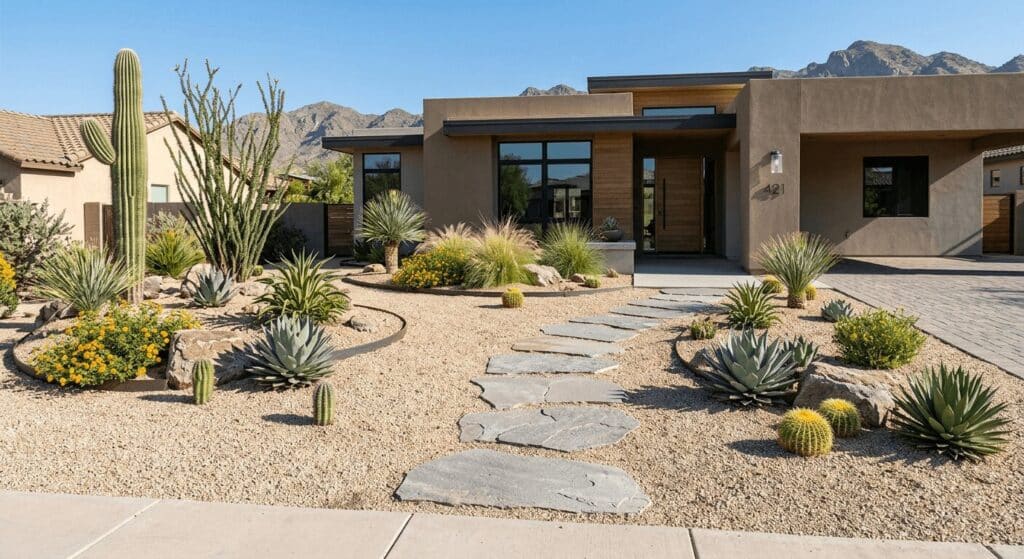
Modern Gravel Desert Yard
Quick Tips:
- Use decomposed granite for a softer look
- Combine different gravel sizes for depth
- Add edging for a clean finish
2. Use Native Plants for Easy Maintenance
Native plants are essential in desert landscape design because they naturally adapt to the climate. Using plants native to desert regions ensures resilience and low maintenance, as these species are well-suited to withstand extreme heat and drought.
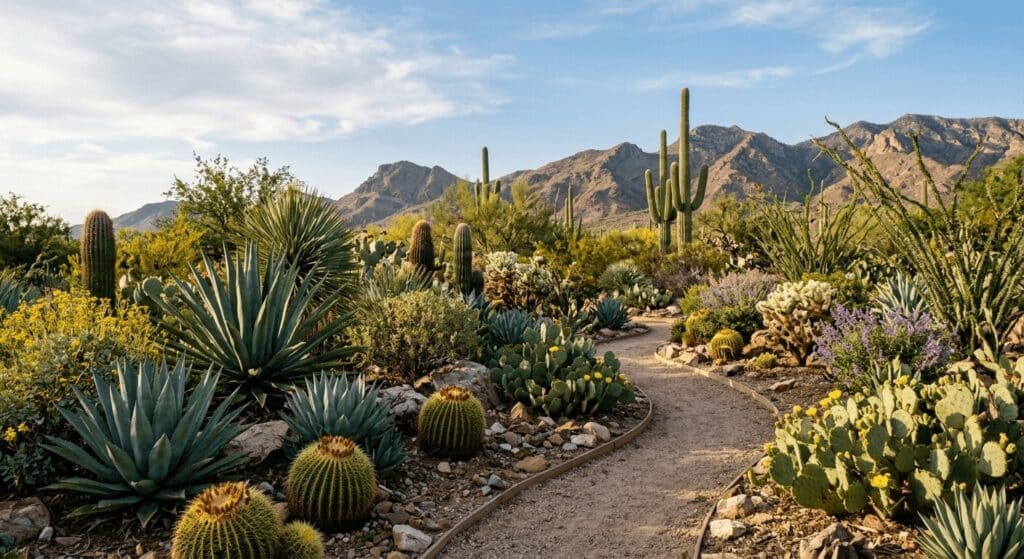
Native Desert Plant Garden
Quick Tips:
- Choose plants that thrive locally
- Group plants with similar water needs
- Reduce irrigation requirements
Planting native plants closely together can help conserve water by providing mutual shade and reducing soil moisture evaporation.
Incorporating native wildflowers and desert wildflowers, such as desert marigold (Baileya multiradiata) and Mexican gold poppies, can add vibrant color to your garden while requiring minimal water and attracting beneficial insects. Using native plants in desert landscaping not only enhances aesthetic appeal but also promotes ecological balance by providing habitats for local wildlife and reducing the need for irrigation.
3. Add a Modern Patio Area
A well-designed patio creates a functional outdoor living space for relaxing and entertaining. Transitional spaces, such as pergolas, shade sails, or trellises, can enhance outdoor comfort and protect both people and plants from the sun.
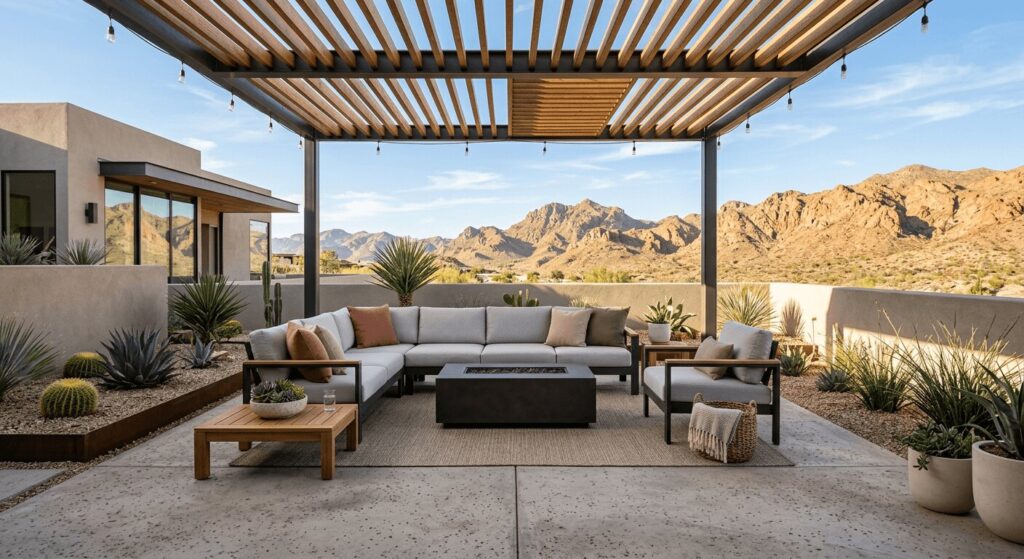
Desert Patio Lounge Area
Quick Tips:
- Use concrete, pavers, or natural stone
- Add shade structures like pergolas
- Keep the layout open and airy
- Incorporate features with a cooling effect, such as water features or shade structures, to make patio areas more comfortable during hot days
4. Incorporate Large Decorative Rocks
Rocks are a key feature in many desert landscape design ideas, adding structure and visual interest.
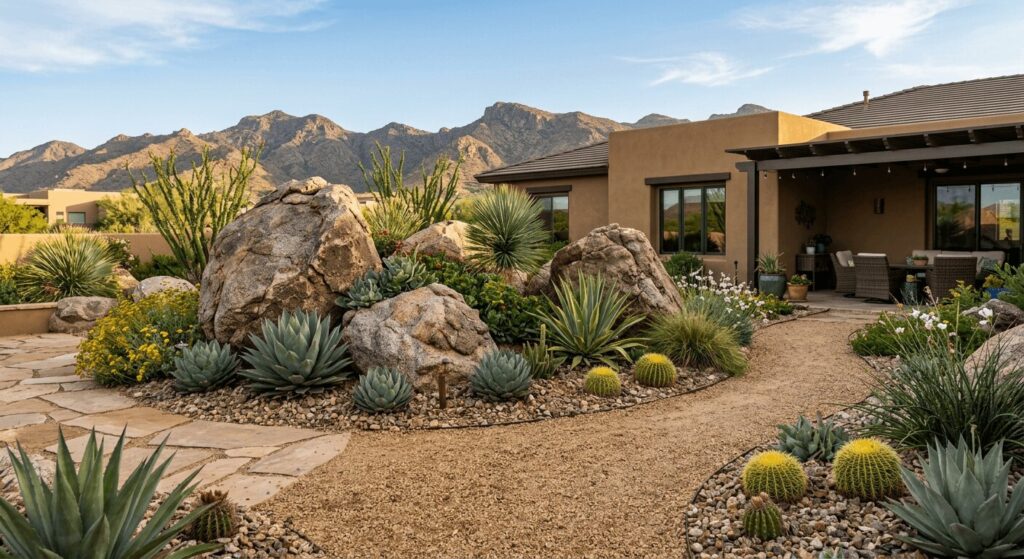
Rock Feature Desert Landscape
Quick Tips:
- Place boulders as focal points to enhance the natural appearance of the landscape
- Mix sizes for a natural look
- Position rocks near plant groupings
Incorporating hardscaping elements like boulders and flagstone can also help create shaded areas that reduce the need for traditional lawns.
5. Design a Dry River Bed
A dry river bed mimics natural desert drainage patterns while enhancing the design.
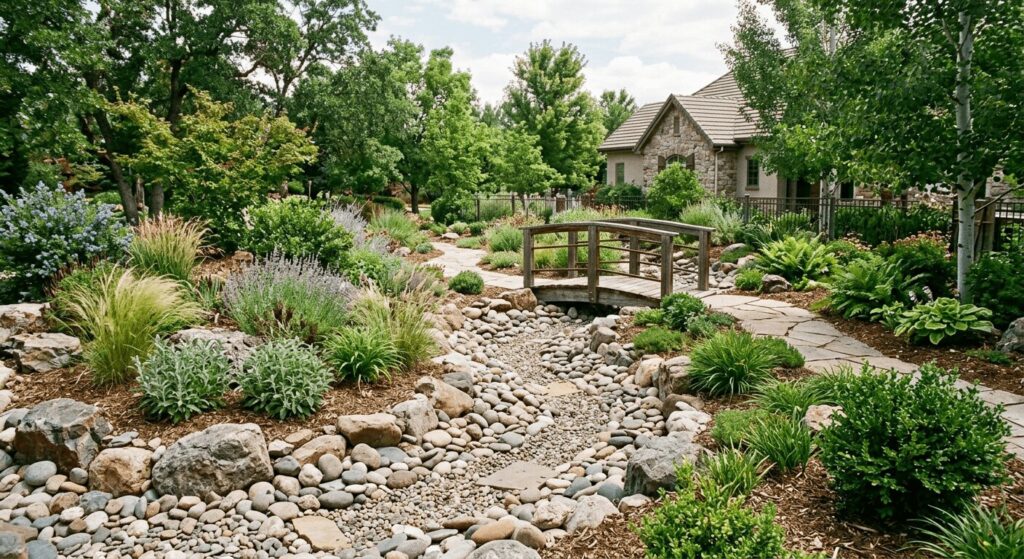
Dry River Bed Landscaping
Quick Tips:
- Use smooth river rocks
- Create a flowing shape
- Combine with drought-tolerant plants
6. Add Raised Planters for Structure
Raised planters help define space and elevate the overall design. Garden beds, including raised planters, are essential for water-efficient planting and allow for targeted soil amendment strategies in desert landscaping.
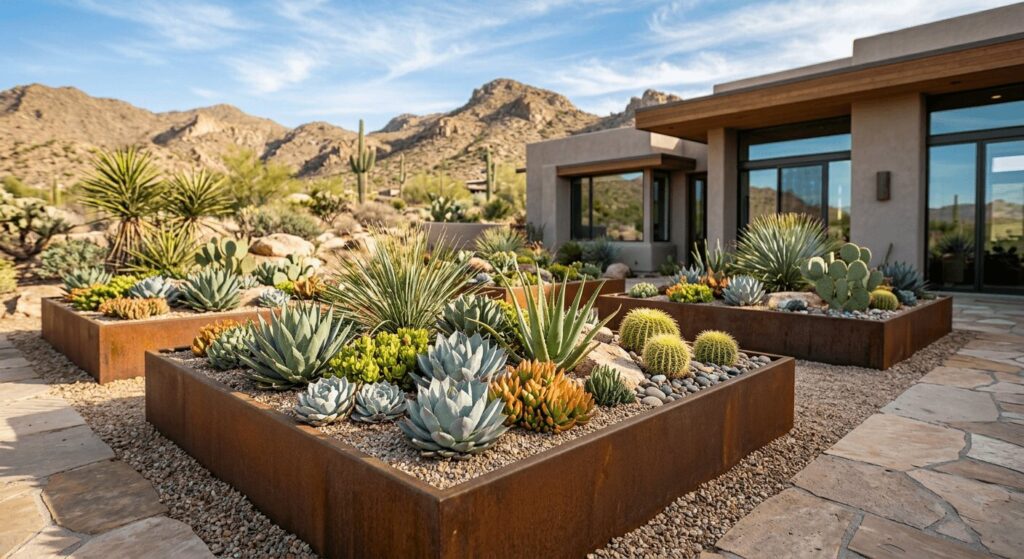
Raised Planter Desert Design
Quick Tips:
- Use concrete or stone materials
- Keep plant selections simple
- Add lighting for nighttime appeal
7. Create a Minimalist Desert Garden
Minimalism works beautifully in desert environments.
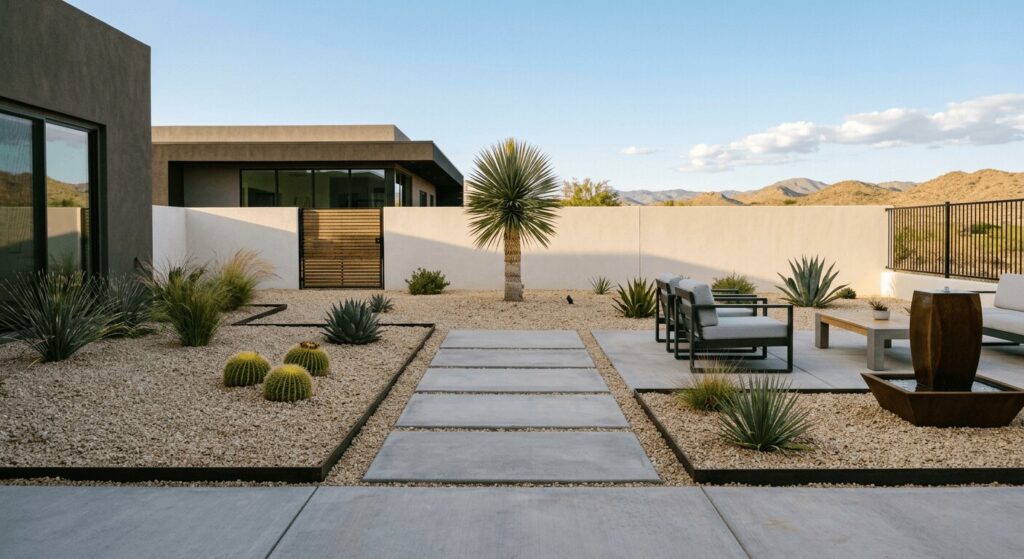
Minimalist Desert Garden
Quick Tips:
- Focus on symmetry and spacing
- Limit plant variety
- Use neutral tones
Incorporating other elements, such as seating, pathways, or sculptural features, can complement the minimalist design and add visual interest.
8. Install Outdoor Lighting
Lighting enhances safety and highlights key features at night.
Well-placed lighting can also enhance curb appeal, especially in the front yard, by drawing attention to focal points and making the space more inviting to visitors.
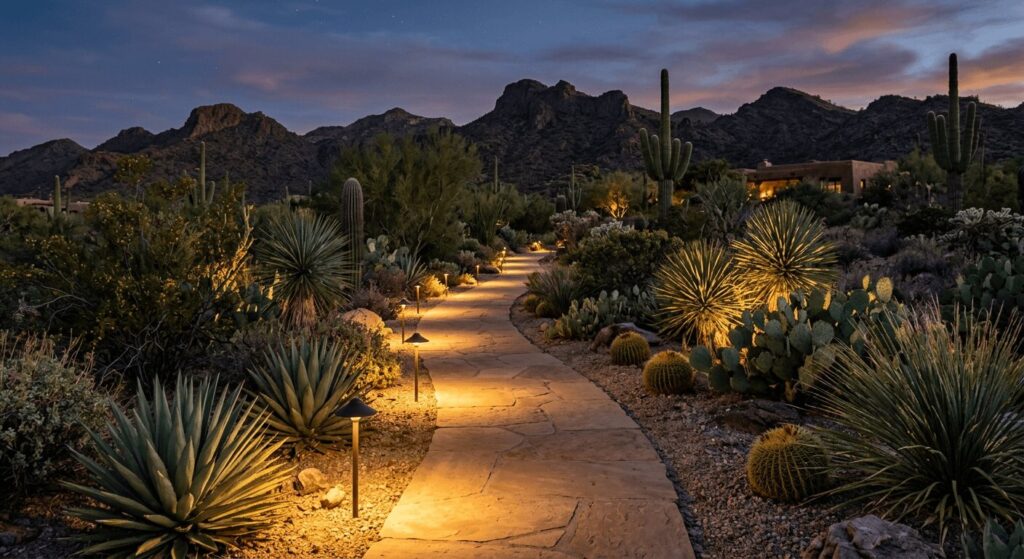
Desert Landscape Lighting
Quick Tips:
- Use warm LED lighting
- Highlight focal plants
- Illuminate pathways
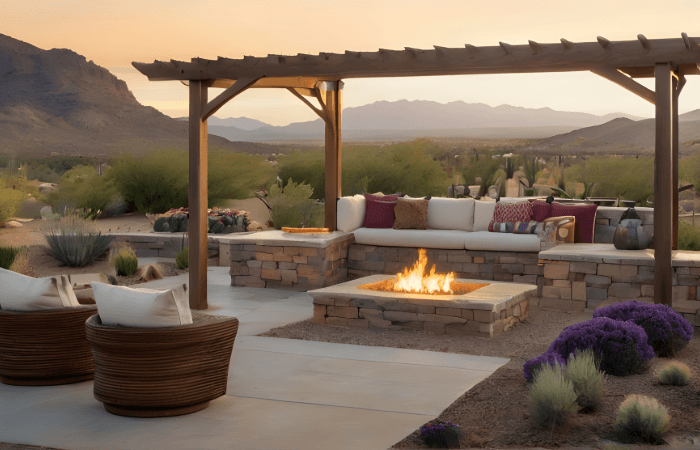
9. Add a Fire Pit Area
Fire features are perfect for desert climates, especially during cooler evenings.
When temperatures dip in the evening or during autumn, a fire pit creates a cozy outdoor gathering space that enhances your enjoyment of the desert landscape.
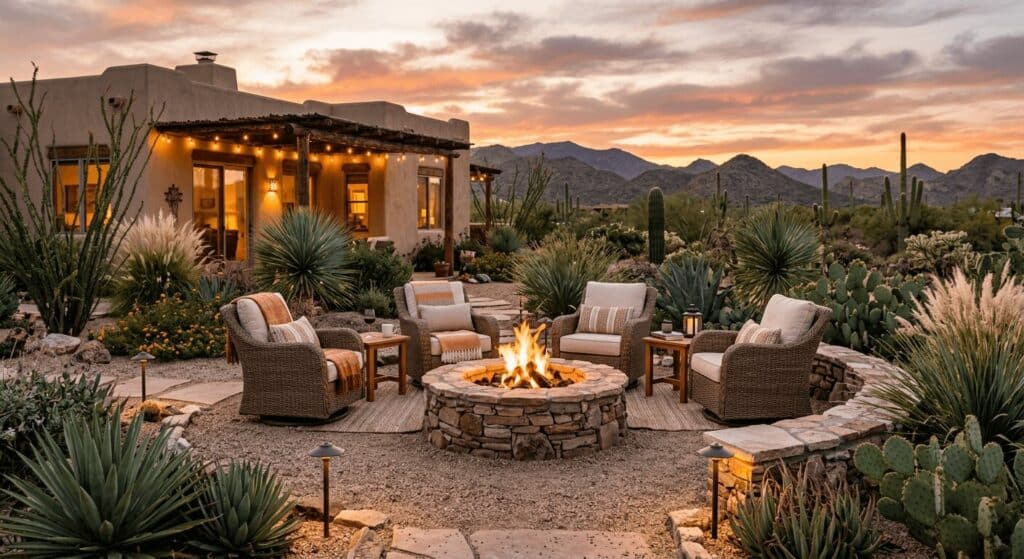
Fire Pit Desert Backyard
Quick Tips:
- Use heat-resistant materials
- Add built-in seating
- Keep layout open
10. Use Artificial Turf Strategically
If you want a green look without maintenance, artificial turf is a great option.
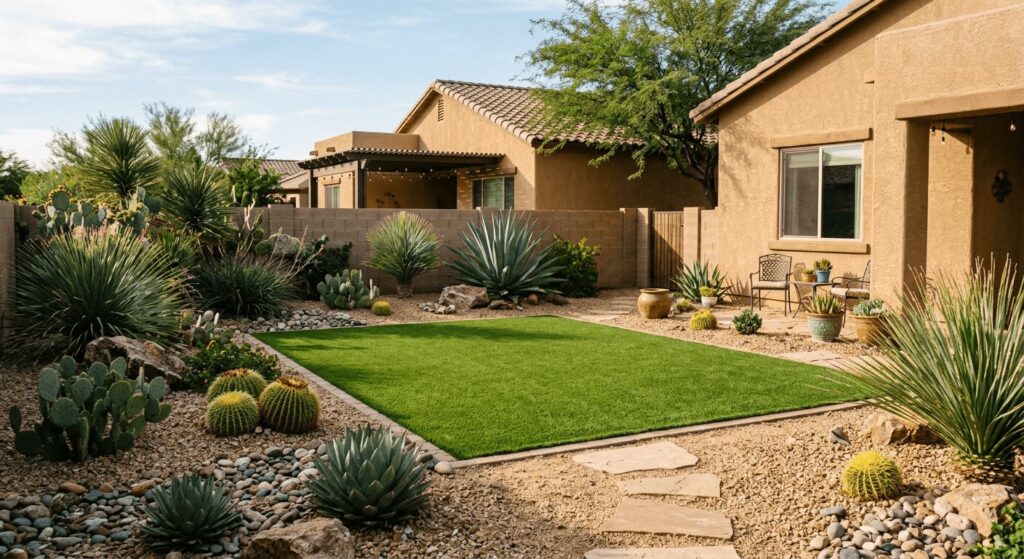
Artificial Turf Desert Yard
Quick Tips:
- Use turf in small zones
- Combine with hardscape
- Avoid overuse
11. Design Functional Walkways
Walkways guide movement and improve usability.
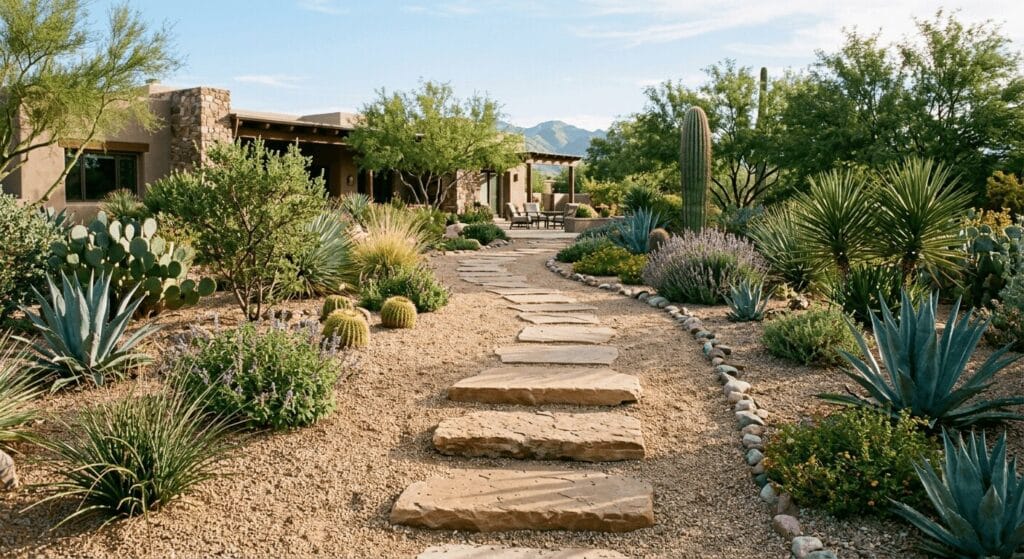
Desert Walkway Design
Quick Tips:
- Use pavers or natural stone
- Keep spacing consistent
- Integrate with overall layout
12. Add Water Features (Low-Water Options)
Even in desert designs, water features can be used efficiently. Even small water features can provide a cooling effect, making outdoor spaces more comfortable in hot desert climates.
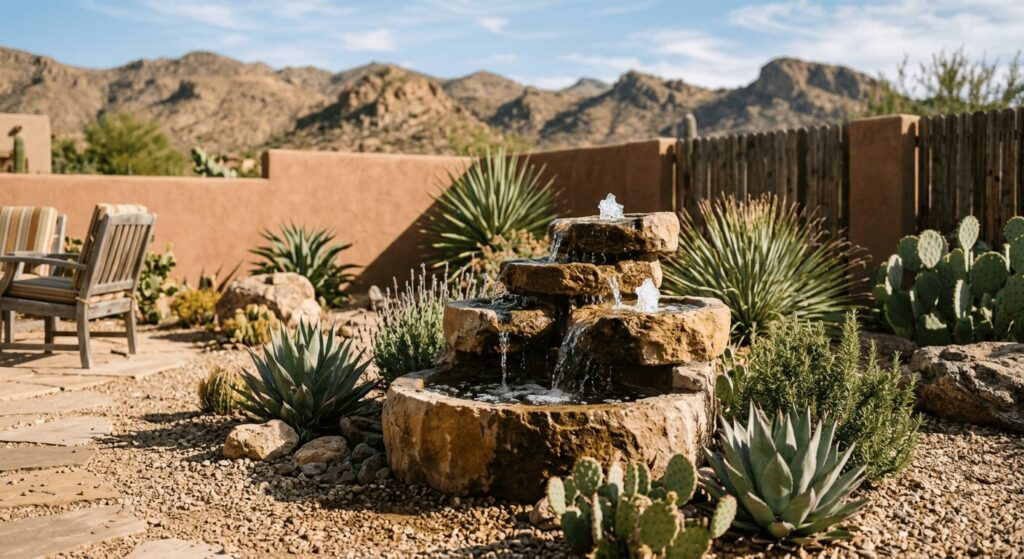
Small Desert Fountain
Quick Tips:
- Choose recirculating systems
- Keep features small
- Place near seating areas
Using drip irrigation systems for water features and surrounding plants can significantly reduce water usage by delivering water directly to the roots and minimizing evaporation.
13. Incorporate Shade Structures
Shade is essential for comfort in desert climates.
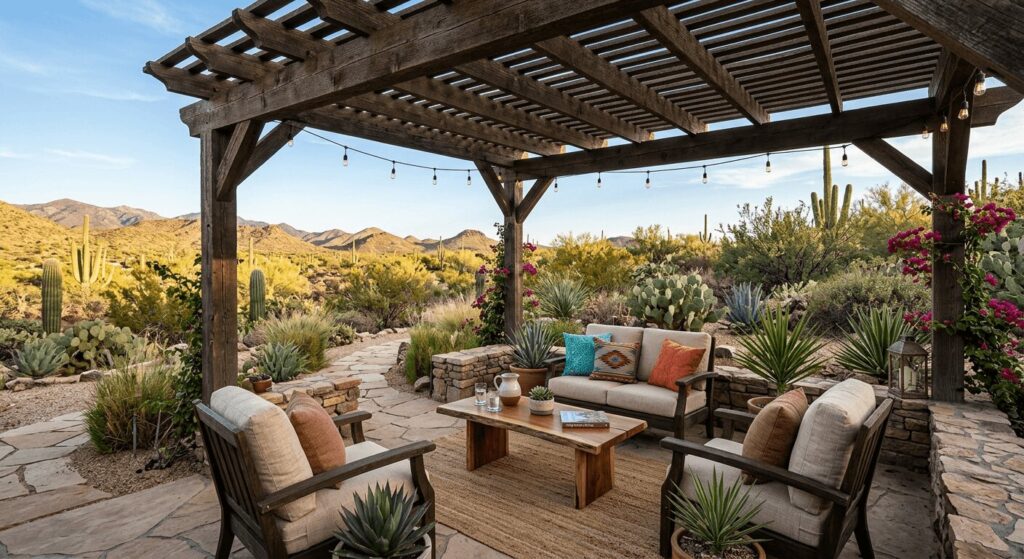
Pergola Desert Patio
Quick Tips:
- Use pergolas or shade sails
- Position based on sun direction
- Combine with seating areas
14. Mix Textures and Materials
Combining materials creates depth and visual interest.
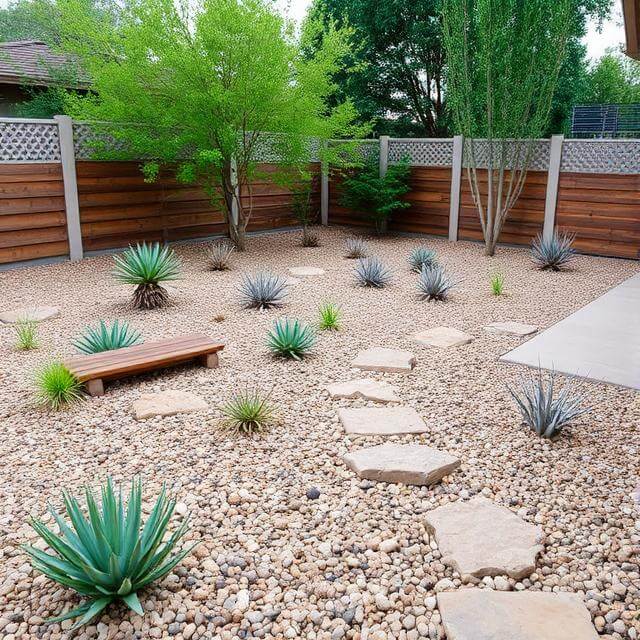
Mixed Material Desert Design
Quick Tips:
- Use 2–3 main materials
- Keep colors cohesive
- Balance hard and soft elements
15. Create Zones for Functionality
Divide your yard into areas for different uses.
Incorporating natural landscape features, such as existing rocks and terrain, can help define zones and create a unique outdoor environment.
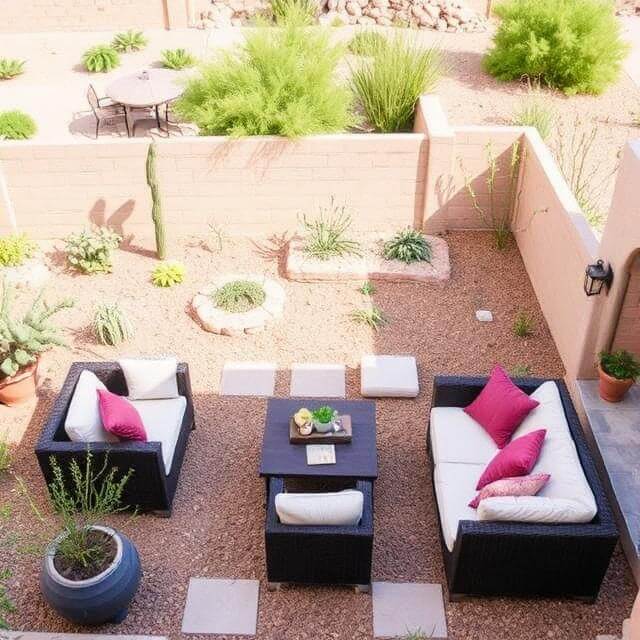
Zoned Desert Backyard
Quick Tips:
- Define areas with hardscape
- Keep transitions smooth
- Design for your lifestyle
Hydrozoning, or grouping plants with similar water requirements, helps prevent over- or under-watering and improves water efficiency.
Desert Landscaping on a Budget
Creating a striking desert landscape doesn’t have to be expensive. With a little creativity, you can achieve a beautiful, low-maintenance yard while keeping costs down. Opt for affordable materials like gravel or decomposed granite instead of pricier hardscape options. These materials are not only budget-friendly but also perfect for desert landscaping.
Look for plant sales at local nurseries or propagate new plants from cuttings of existing ones to save money. DIY projects, such as building a fire pit or crafting a unique focal point from found objects, can add personality and visual interest to your landscape without a hefty price tag. Incorporating artificial turf in small areas or using drought-tolerant groundcovers can also help reduce water usage and ongoing maintenance costs.
By focusing on cost-effective desert landscaping ideas and making smart choices, you can transform your outdoor space into a stunning desert oasis without overspending.
Desert Landscaping Trends
Desert landscaping trends are shifting toward sustainability, water conservation, and celebrating the natural beauty of the desert. Homeowners are increasingly choosing native plants and drought tolerant varieties, such as succulents and cacti, for their low maintenance and resilience in arid climates.
Modern landscape design often features hardscaping elements like permeable pavers and retaining walls, which add structure and help manage water runoff. Outdoor lighting, especially solar-powered options, is gaining popularity for its ability to highlight plants and pathways while keeping energy use low.
There’s also a move toward more organic, naturalistic designs that echo the surrounding desert landscape. By embracing these trends, you can create a landscape that’s not only visually stunning but also environmentally responsible and easy to care for year round.
Desert Garden Maintenance
While desert gardens are known for being low maintenance, a little regular care goes a long way in keeping your landscape healthy and attractive all year round. Water your desert plants deeply but infrequently to encourage strong, drought tolerant root systems. Prune regularly to maintain shape, promote healthy growth, and encourage blooms.
Fertilize sparingly, as most desert plants are adapted to thrive in nutrient-poor soils. Mulching with gravel or rock helps retain moisture, suppress weeds, and regulate soil temperature—key for plant health in extreme desert heat. Make it a habit to inspect your garden for pests or diseases so you can address any issues early.
With these simple maintenance tips, your desert garden will continue to showcase its natural beauty and vibrant color, providing a stunning, low-maintenance landscape year round.
How to Design a Desert Landscape Step-by-Step
- Analyze your space (sun, soil, slope). Observe how light falls across your yard throughout the day, noting areas of full sun, partial shade, and deep shade. This helps determine optimal plant placement and garden design.
- Define how you want to use your yard
- Choose a layout and style
- Select drought-tolerant plants
- Plan hardscape elements
- Install irrigation (drip systems recommended). Schedule deep watering during mornings when evaporation rates are lowest. Consider subterranean irrigation systems, which target roots directly and significantly reduce evaporation compared to overhead spray methods.
Frequently Asked Questions
How Do You Design a Desert Landscape?
Start with a plan that includes plant selection, hardscape layout, and irrigation. Focus on drought-tolerant plants and materials like gravel and stone to create a low-maintenance design. Incorporate a variety of other plants alongside main features such as trees and succulents to enhance visual interest and functionality in your desert landscape.
What Plants Are Best for Desert Landscaping?
Popular choices include agave, cactus, succulents, palo verde trees, and ornamental grasses. Prickly pear cactus, Joshua tree, pink trumpet vine, and desert mallow are also excellent plant choices for desert landscaping. Many ornamental grasses tolerate sandy soil, little water, and high temperatures, making them ideal for these conditions.
Plants with bright red flowers, such as chuparosa, add vibrant color to your garden and attract pollinators like butterflies and hummingbirds. Native plants like Baja fairy duster (Calliandra californica) and chuparosa (Justicia californica) are well-suited for desert landscapes due to their ability to thrive in arid conditions and attract pollinators.
Drought-tolerant plants, such as succulents and cacti, are essential for creating a sustainable, low-maintenance desert garden. Native and drought-tolerant species are adapted to extreme heat and sandy, quick-draining soil in Palm Desert.
Desert trees like Desert Willow and Palo Verde provide shade, lower ground temperatures, and reduce evaporation. In high desert regions, it’s important to select plants adapted to cooler winters and hot summers, and to consider temperature extremes when planning your desert landscape.
Is Desert Landscaping Expensive?
It can be affordable compared to traditional landscaping. While initial installation may vary, long-term costs are lower due to reduced water use and maintenance.
What Is the Best Ground Cover for Desert Landscapes?
Gravel, decomposed granite, mulch, and rocks are the most common and cost-effective ground cover options.
Final Thoughts
With the right strategy, desert landscape design can completely transform your outdoor space into something both practical and visually stunning. Many desert plants, such as succulents and cacti, store water in their leaves and stems, allowing them to thrive in full sun and with minimal irrigation. By combining smart planning, drought-tolerant plants, and modern design elements, you can create a yard that thrives in any dry climate.
Ready to Transform Your Outdoor Space?
At Harmony Landscape Design, we specialize in creating custom desert landscapes tailored to your property, lifestyle, and vision.
Start your project today and bring your outdoor space to life with expert design and realistic 3D renderings.
Written by: Shir Amram

Shir Amram is the Founder and Lead Landscape Designer at Harmony Landscape Design. She specializes in modern landscape design, 3D outdoor renderings, planting plans, and full-property planning for homeowners nationwide. Her design process helps clients visualize their outdoor space before construction begins, creating clarity and confidence in every project.