Construction mistakes in outdoor projects are more common than most homeowners realize. Incorrect measurements, misunderstood layouts, mismatched materials, and unclear expectations can lead to delays, budget overruns, and frustrating revisions.
This is exactly why 3D landscape renderings have become an essential part of modern landscape design.
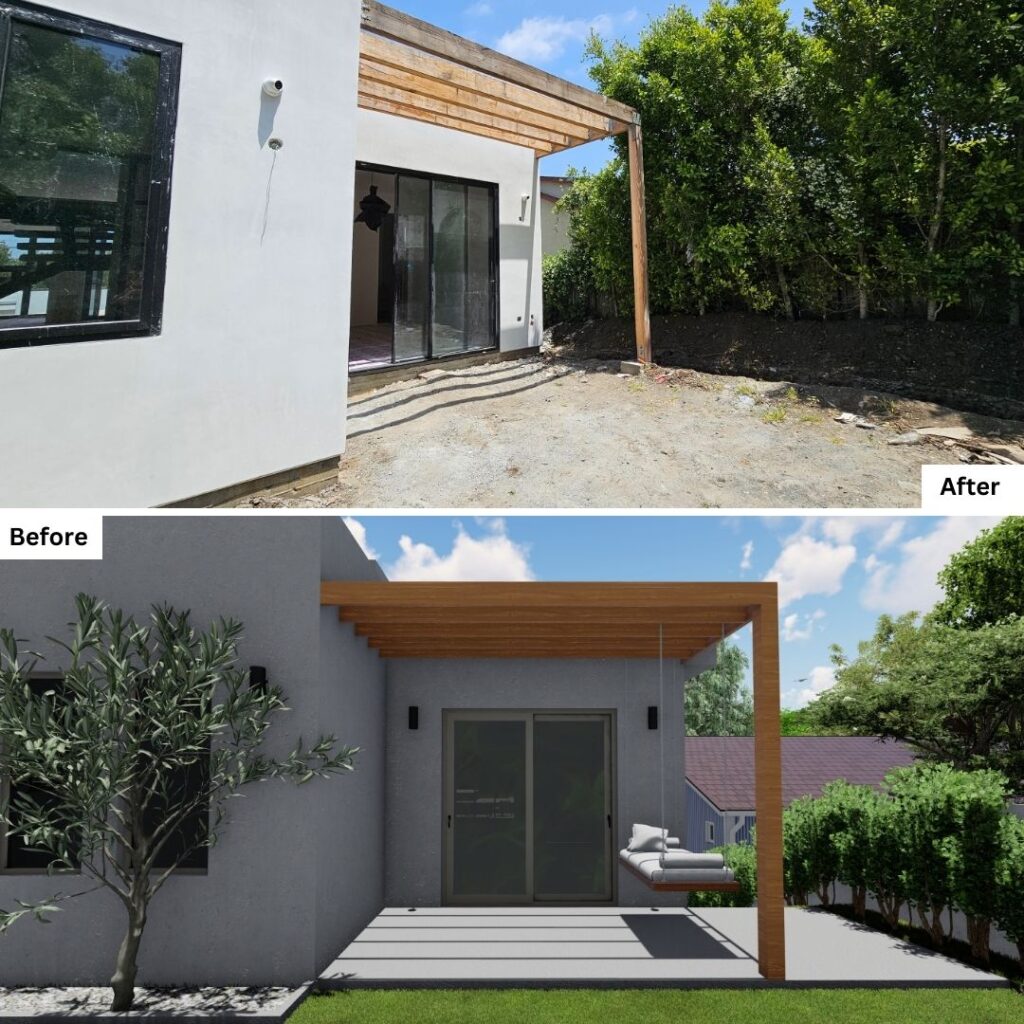
Instead of relying on flat 2D drawings or verbal descriptions, 3D renderings allow you to see your outdoor space before construction begins. And that visual clarity dramatically reduces costly construction errors.
In this article, we’ll break down exactly how 3D landscape renderings prevent mistakes, protect your budget, and create smoother project execution.
- What Are 3D Landscape Renderings?
- How 3D Landscape Renderings Reduce Construction Mistakes
- Real-World Example: How 3D Rendering Prevented a Costly Mistake
- 3D Renderings vs 2D Landscape Plans
- Do 3D Landscape Renderings Replace Construction Plans?
- Why Modern Landscape Projects Should Always Start with 3D
- Final Thoughts: Prevent Mistakes Before They Happen
- FAQ’s
What Are 3D Landscape Renderings?
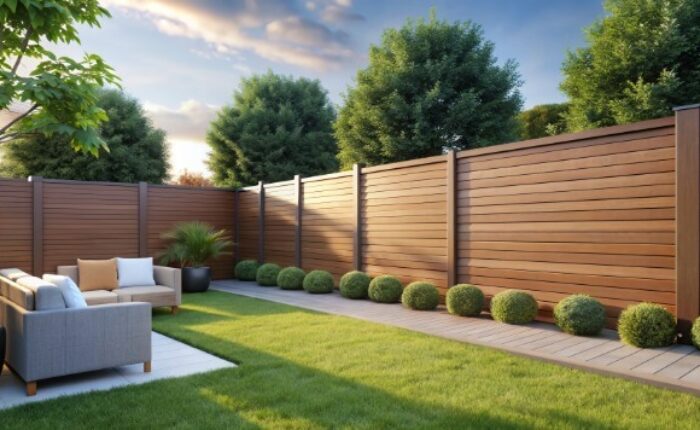
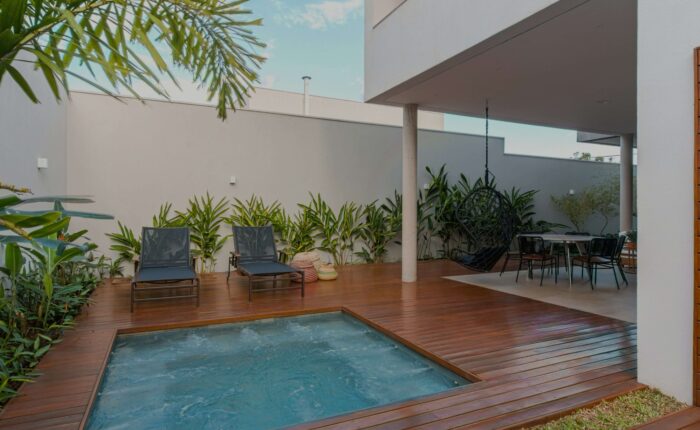
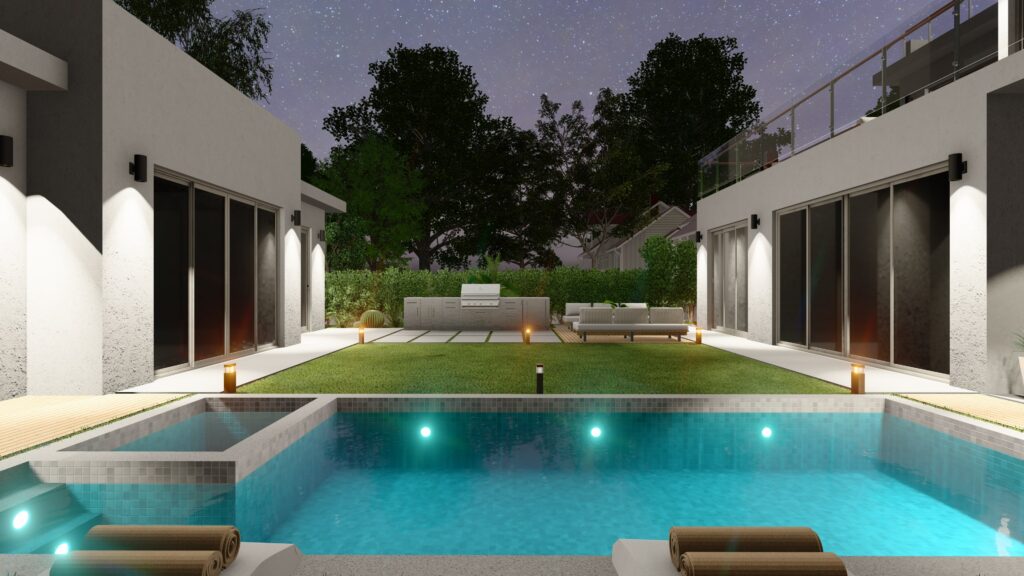
A 3D landscape rendering is a realistic digital visualization of your outdoor design. It shows:
- Hardscape elements (patios, walkways, retaining walls)
- Outdoor kitchens and pergolas
- Pools and water features
- Planting layouts
- Lighting (day and night views)
- Furniture placement
- Material textures and colors
Unlike 2D construction drawings, 3D renderings provide depth, scale, perspective, and realistic materials – allowing homeowners and contractors to fully understand the final outcome.
How 3D Landscape Renderings Reduce Construction Mistakes
1. Eliminates Miscommunication Between Designer and Contractor
One of the biggest causes of construction mistakes is interpretation.
Even experienced contractors can interpret 2D plans differently. A measurement may be correct, but the visual intention may not be clear. Small misunderstandings can lead to:
- Incorrect patio dimensions
- Misaligned steps
- Improper grading
- Wrong material installation
A 3D rendering removes guesswork.
When contractors see a realistic visualization, they understand:
- Proportions
- Elevation changes
- Transitions between materials
- Design intent
This clarity reduces costly back-and-forth adjustments during construction.
2. Identifies Design Flaws Before Construction Starts
It’s far cheaper to fix a problem on a screen than on-site.
3D landscape renderings help detect:
- Poor traffic flow
- Tight seating areas
- Oversized features
- Improper spacing between elements
- Visibility issues from interior windows
- Drainage conflicts
For example, a fire pit that looks properly sized on a 2D plan may feel cramped in a realistic 3D perspective. Catching that before construction prevents demolition and reconstruction costs.
3. Reduces Material & Measurement Errors
Material mistakes are one of the most expensive issues in outdoor construction.
Without clear visual documentation, contractors may:
- Install the wrong paver pattern
- Choose incorrect coping style
- Use unintended finish textures
- Order incorrect quantities
3D renderings clearly show:
- Exact material placement
- Pattern orientation
- Color combinations
- Height relationships
This visual reference acts as a quality control tool throughout the build process.
4. Improves Budget Accuracy
Unexpected costs often result from mid-project changes.
When homeowners cannot visualize the final design, they are more likely to request revisions once construction has begun.
3D landscape visualization reduces those “I didn’t realize it would look like that” moments.
By seeing:
- Day and night lighting effects
- Shadow casting
- Scale of structures
- Plant maturity representation
Clients can confidently approve the design before materials are ordered.
That approval stability protects the construction budget.
5. Enhances Contractor Efficiency
Clear 3D documentation speeds up construction.
Instead of calling the designer for clarification, contractors can reference:
- Detailed views
- Multiple angles
- Zoomed-in sections
- Walkthrough perspectives
This reduces:
- Downtime
- Design interpretation calls
- Change orders
- On-site confusion
The result? Faster project completion and smoother coordination.
6. Builds Client Confidence Before Breaking Ground
Homeowners often hesitate before investing in major landscape projects.
3D renderings:
- Increase trust
- Set realistic expectations
- Reduce anxiety
- Prevent disappointment
When clients feel confident in the outcome, they make decisions faster – and that momentum keeps projects moving forward.
7. Prevents Structural & Elevation Mistakes
Outdoor spaces often include:
- Steps
- Retaining walls
- Raised planters
- Pool coping
- Multi-level patios
Height miscalculations can cause serious functional and safety issues.
A 3D landscape rendering clearly illustrates:
- Vertical transitions
- Riser heights
- Visual balance
- Drainage slopes
This reduces structural corrections during construction.
Real-World Example: How 3D Rendering Prevented a Costly Mistake
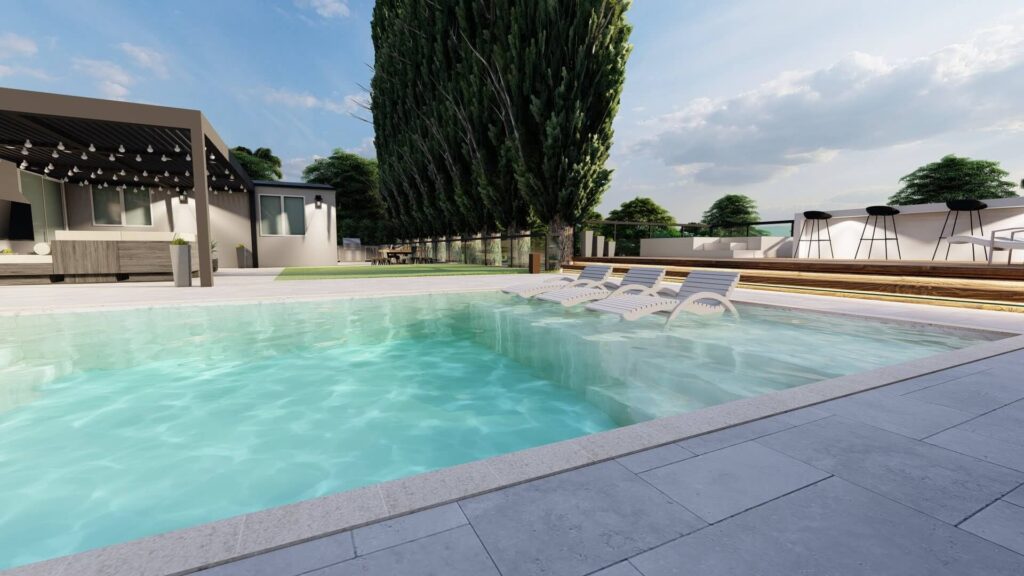
In one project, a pergola was positioned too close to a pool edge in the initial 2D layout. It technically met clearance requirements, but once visualized in 3D, it became clear the space felt tight and blocked views from the home.
The pergola was repositioned digitally in minutes.
Had that error been discovered after installation, it would have required demolition, material waste, and additional labor costs.
This is the power of visual validation before construction.
3D Renderings vs 2D Landscape Plans
| Feature | 2D Plans | 3D Renderings |
| Visual Depth | Limited | Full perspective |
| Elevation Clarity | Technical only | Visually realistic |
| Material Visualization | Symbol-based | Real textures |
| Error Prevention | Moderate | High |
| Client Understanding | Often unclear | Immediate clarity |
While 2D construction drawings are essential for technical execution, combining them with 3D renderings significantly reduces risk.
Do 3D Landscape Renderings Replace Construction Plans?
No.Professional landscape projects still require detailed 2D construction drawings for:
- Measurements
- Engineering requirements
- Permits
- Structural specifications
However, 3D renderings complement those documents by ensuring visual alignment before building begins.
The strongest projects use both.
Why Modern Landscape Projects Should Always Start with 3D
Outdoor living spaces today are more complex than ever:
- Outdoor kitchens
- Integrated lighting systems
- Smart irrigation
- Fire features
- Custom shade structures
With increasing design complexity, visual clarity becomes essential.
3D landscape renderings reduce:
- Change orders
- Construction delays
- Budget overruns
- Client dissatisfaction
They transform design from abstract to tangible – before the first shovel hits the ground.
Final Thoughts: Prevent Mistakes Before They Happen
Construction mistakes are expensive. Revisions waste time, materials, and energy.
Investing in 3D landscape renderings during the design phase significantly lowers project risk and improves overall build quality.
When everyone – homeowner, designer, and contractor – sees the same vision clearly, projects run smoother from start to finish.
If you’re planning a landscape renovation, start with clarity. It’s the smartest way to protect your investment.
FAQ’s
Do 3D Landscape Renderings Guarantee Zero Construction Mistakes?
No design process can eliminate all construction risk. However, professional 3D landscape renderings significantly reduce interpretation errors by clearly showing layout, materials, elevations, and spatial relationships before construction begins. When combined with detailed 2D construction drawings, they help prevent costly change orders and on-site revisions.
Are 3D Landscape Renderings Worth the Investment?
In most landscape projects, the cost of a 3D rendering is far lower than correcting one construction mistake. Because 3D visualization allows homeowners and contractors to approve materials, scale, and layout in advance, it reduces mid-project changes, delays, and material waste – ultimately protecting the overall construction budget.
Can Contractors Build Directly From 3D Landscape Renderings?
Contractors should not rely on 3D renderings alone. While renderings provide visual clarity, technical measurements, engineering details, and permit information must come from 2D construction plans. The strongest landscape projects use both 3D renderings and detailed construction drawings for accuracy and efficiency.
Written by: Shir Amram

Shir Amram is the Founder and Lead Landscape Designer at Harmony Landscape Design. She specializes in modern landscape design, 3D outdoor renderings, planting plans, and full-property planning for homeowners nationwide. Her design process helps clients visualize their outdoor space before construction begins, creating clarity and confidence in every project.