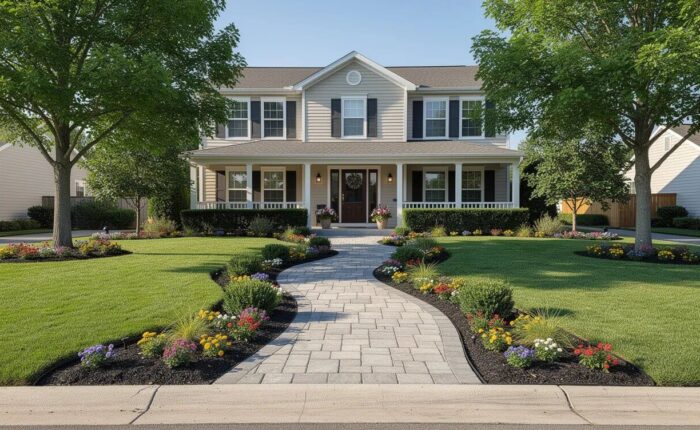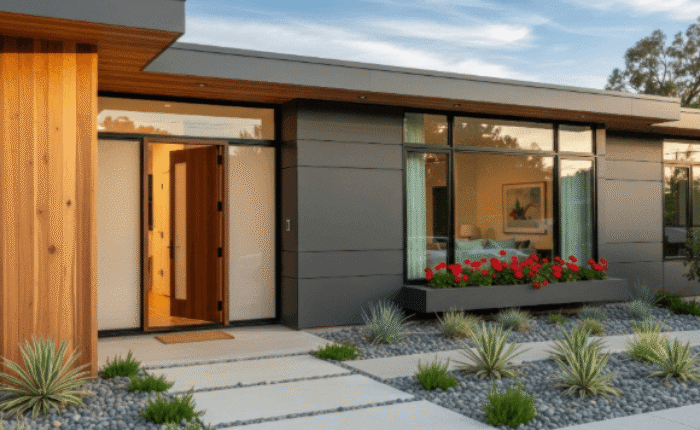
If your backyard feels more like a fishbowl than a private sanctuary, you’re not alone. Privacy landscaping combines plants, fences, pergolas, and terrain modifications to block views, reduce noise, and carve out functional outdoor rooms where you can actually relax.
Key Takeaways
- Privacy landscaping uses vegetation (hedges, trees, bamboo) combined with structures (fences, pergolas, stone walls) to block views from neighbors, streets, and nearby buildings while creating distinct outdoor spaces.
- Effective designs consider your local climate zone, sun exposure, wind patterns, and legal fence height limits – which typically cap at 6 feet in front yards and 6-8 feet in backyards across most U.S. municipalities in 2026.
- Combining living screens with structural elements delivers the most resilient long-term solution, offering both immediate occlusion and maturing green coverage.
- A phased approach over 1-3 years prevents costly mistakes – start with site assessment and hardscape, then add major plantings, followed by infill and refinements.
- This guide covers strategies by yard type (front yard, backyard, side yard, balcony), plus FAQs about cost, timing, and low-maintenance options to help you create privacy without constant upkeep.
What Is Privacy Landscaping (and Why It Matters Now)
Privacy landscaping is the deliberate use of plants, topography, and structures to shield patios, yards, and windows from unwanted sightlines and sound. Think of it as garden design with a specific purpose: creating a secluded outdoor space where you control who sees in.
The demand has surged dramatically by 2026. Denser neighborhoods mean more nosy neighbors with clear views into your yard. Two-story infill housing built under relaxed zoning since 2023 creates overlooking windows that didn’t exist before. Home offices need quiet. And outdoor living has exploded – home spa and fire pit installations rose 25% since 2020, according to industry data. Surveys show 62% of U.S. homeowners cite neighbor visibility as their top backyard complaint.
Common privacy goals include:
- Blocking a two-story addition a neighbor built in 2023
- Screening a busy collector road with electric delivery vans running 24/7
- Hiding pool equipment installed closer to the property line under updated setback rules
- Creating a hidden retreat around an outdoor kitchen or patio
Beyond blocking views, privacy landscaping improves comfort through noise reduction, wind reduction, and shade. It increases usable space by making small yards feel larger. And according to the National Association of Realtors’ 2025 landscaping impact study, effective sightline obstructions can boost property values by 7-12%.
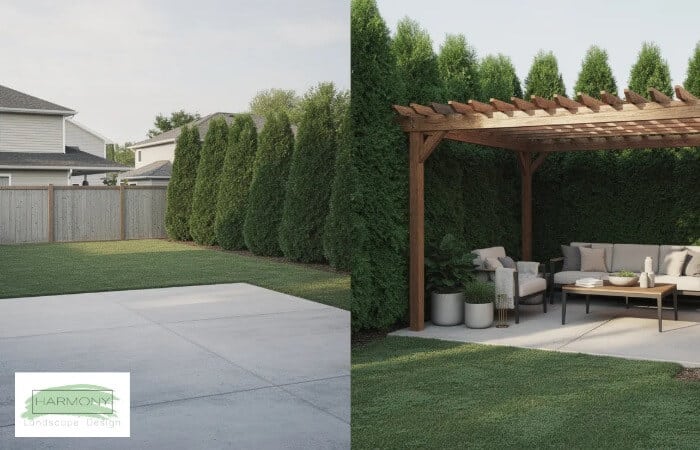
The image depicts a backyard transformation showcasing a bare exposed patio on one side and a beautifully enclosed private sanctuary on the other, featuring mature evergreen hedges and a stylish pergola that creates a secluded outdoor space. This design enhances privacy while providing a serene area for relaxation, effectively blocking views and noise from nosy neighbors.
Assessing Your Site and Privacy Needs
Before buying a single plant or fence panel, spend one weekend mapping problems and opportunities in your yard. This assessment prevents expensive mistakes and ensures your solutions target the actual issues.
Walk Your Property at Different Times
Walk your entire property at morning, afternoon, and evening hours. Mark exactly where you feel exposed or can see into neighbors’ windows. Privacy problems shift throughout the day – morning sun might reveal second-floor neighbor windows you never noticed, while afternoon shadows expose patio sightlines from a different angle.
List Specific Eyesores
Create a concrete list of what you need to screen:
- Air-conditioning condensers humming 10-15 feet from your fence
- Trash enclosures visible from your kitchen sink
- An alley with constant delivery traffic
- Your neighbor’s elevated deck overlooking your pool
Identify Sun, Wind, and Climate Patterns
Understanding your microclimate shapes plant selection and placement:
| Climate Challenge | Location Example | Solution Approach |
| Strong winter winds (20+ mph) | Upper Midwest (northwest exposure) | Windbreak plantings with 60%+ evergreen cover |
| Harsh western sun | Southwest | Heat-reflective berms with pale gravel mulch |
| Heavy shade | Northeast woodland lots | Shade-tolerant shrubs like yew or holly |
Document with Photos and Sketches
Take phone photos from key spots – your back patio, kitchen sink, second-floor bedroom. Sketch sight lines on a simple plan to guide where screens and structures should go. Free apps can overlay 3D models to calculate optimal screen heights, typically 8-12 feet for blocking two-story windows.
Structural Privacy Solutions: Fences, Panels, and Pergolas
Structural elements provide immediate privacy with clear lines. They’re particularly valuable when you need to block views today while plants mature over the next few years.
Privacy Fences
The privacy fence has evolved significantly since 2020. Horizontal cedar slat designs now dominate about 65% of installations, interlocking 1×4-inch boards at 1/8-inch gaps for roughly 95% opacity while permitting enough airflow to prevent rot.
Composite fencing from manufacturers like Trex or Fiberon withstands 150 mph winds and fades less than 5% over a decade. Expect to pay:
- Pressure-treated pine: $30-60 per linear foot installed
- Composite: $45-85 per linear foot installed
Height regulations remain strict in 2026 – typically 6 feet maximum in front yards to preserve street sightlines, rising to 6-8 feet in backyards. Creative solutions include lattice toppers that add 2-4 feet via climbing plants integration while meeting code requirements.
Modular Privacy Panels
Modular privacy screens target specific zones without enclosing your entire yard:
- Laser-cut steel panels with geometric patterns blocking 85-90% of views
- Frosted acrylic sheets transmitting 40% diffuse light
- Composite slat panels mounted on existing structures
These work perfectly around hot tubs, ground-floor bedroom windows, or outdoor living areas. Costs run $20-50 per square foot.
Pergolas and Overhead Structures
A pergola next to your house can block second-story views when combined with overhead slats, outdoor curtains, or climbing roses. Bioclimatic pergola systems feature aluminum louvers tilting via app control to manage rain and sun while integrating drop-down fabric panels for complete privacy.
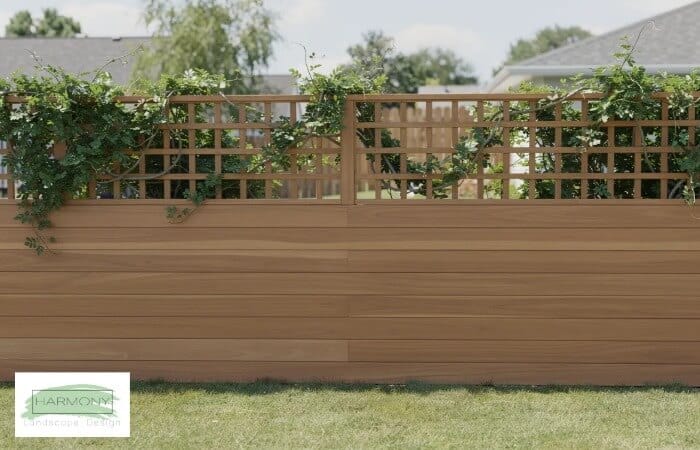
The image features a modern horizontal cedar fence with a lattice top section that supports climbing plants, creating a beautiful privacy screen along a residential property line. This design enhances the outdoor space, providing a secluded area while adding curb appeal and a touch of nature with climbing roses and ornamental grasses.
Living Screens: Hedges, Trees, and Layered Planting
Living screens take longer to mature but provide softer aesthetics, ecological benefits, and often taller coverage than fences allow. Dense plantings host 2-3 times more pollinators than fences alone.
Evergreen Hedges by Application
Rather than memorizing zone charts, choose evergreen hedges based on your situation:
| Application | Recommended Plants | Notes |
| Narrow suburban lots | Arborvitae (Thuja ‘Green Giant’) | 5-6 foot spacing, 100% coverage by year 4 |
| Formal designs | Yew, boxwood | Require 4-6 hours weekly maintenance per 100 linear feet |
| Dry, sunny sites | Juniper, Leyland cypress | 20-30% lower water needs |
| Fast growing screens | Pittosporum ‘Silver Sheen’, Ficus nitida | Natural pyramid shapes, selective pruning only |
Layered Planting Design
Avoid the “wall of green” look by creating multiple layers:
- Back layer: Tall evergreens like arborvitae or Leyland cypress at 3-4 foot centers blocking 98% of sight at 45° angles
- Middle layer: Medium shrubs (viburnum, ninebark, holly) at 5-8 feet providing seasonal interest and foliage texture
- Front layer: Ornamental grasses like Miscanthus swaying to diffuse light
This approach provides screening while maintaining visual depth and natural beauty.
Privacy Trees for Small Spaces
Columnar trees fit urban lots under 30 feet wide, screening 12-15 feet high without canopy spread exceeding 10 feet:
- Carpinus betulus ‘Fastigiata’ hornbeam
- Amelanchier serviceberry (bonus: red berries in fall)
- Malus ‘Scarlet Sentinel’ columnar pear
These flowering trees outperform fences in resale value by 4-6% through perceived lot expansion.
Real Example Layout
Consider a 20-foot backyard needing to screen a two-story house behind. A staggered double row works well:
- 12 Emerald Green arborvitae at 4-foot spacing (rear row)
- Physocarpus ninebark interspersed in front
This combination reduced neighbor visibility by 90% within 18 months while cutting noise by 8-12 dB in documented installations.
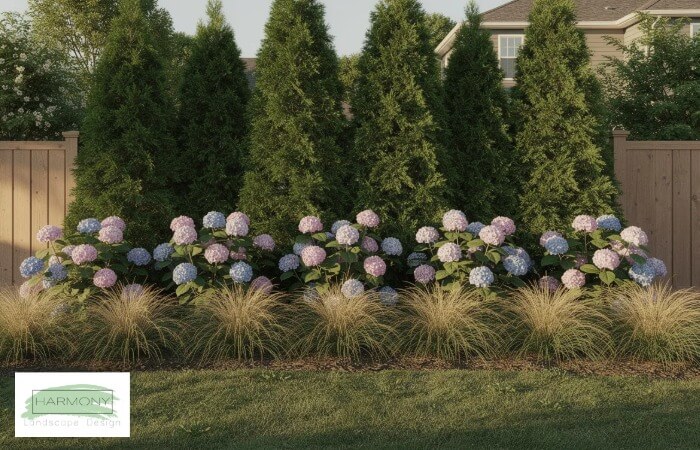
The image depicts a layered privacy planting along a fence line, featuring tall evergreen trees in the back for maximum privacy, medium flowering shrubs in the middle for seasonal interest, and ornamental grasses in the front, creating a secluded outdoor space that effectively blocks views and noise from neighbors. This garden design showcases creative solutions for enhancing curb appeal while providing a private sanctuary.
Fast-Track Ideas: Quick Privacy for the Next 1–2 Years
Many homeowners want privacy within a season or two while slower-growing trees and shrubs fill in. These creative solutions deliver rapid results.
Container-Based Solutions
Containers work beautifully for renters, condo balconies, and phased projects:
- Extra-tall planter boxes (24-36 inches) along balcony railings
- Large trough planters with bamboo or grasses on townhome decks
- Rolling planters that move when you do
Fast-Growing Plants
These plants grow tall quickly to provide screening:
| Plant | Growth Rate | Best Use |
| Fargesia clumping bamboo | 10-12 feet in one year | Containers or root-barrier beds |
| Hybrid Salix ‘Aurora’ willows | 6-8 feet yearly | Moist soils |
| Helianthus sunflowers | 10-12 feet in one season | Annual screens, $2-5 per plant |
| Pennisetum glaucum (ornamental millet) | 8 feet in one season | Temporary gaps coverage |
Important: Clumping bamboo (Fargesia, Bashania) stays contained, unlike running bamboo species banned in 15 states since 2022 due to aggressive 50-foot annual spread.
Temporary Structural Fixes
When you need maximum privacy immediately:
- Fabric panels (95% UV block) on T-posts at $10-15 per square foot
- Lattice panels added atop existing 4-foot fences
- Freestanding wood slat panels requiring no post hole excavation
These enable 80% privacy improvement in weeks, not years.
Designing Privacy for Specific Spaces
Different areas of your property need tailored strategies. A single uniform hedge rarely addresses all privacy concerns effectively.
Backyard Living Areas
Create distinct “rooms” around features like a 12×16-foot patio, pool, or outdoor kitchen using:
- L-shaped hedge sections carving out 30-40% more usable space
- Pergolas with side screens blocking specific sightlines
- Tall planting beds opening inward while blocking outward views
The goal is blocking key views from nosy neighbors while preserving open vistas within your private space.
Front Yards
Front yards require balancing privacy with curb appeal and local sightline rules near driveways:
- Areca palms (15-20 feet in warm zones) for natural screening
- Flowering shrubs at 4 feet or shorter
- Decorative metal panels complying with 10-foot driveway sight triangles
Most municipalities limit front yard fences to maintain neighborhood character, so existing landscaping creativity matters here.
Side Yards and Narrow Passages
Side yards under 4 feet wide demand slim solutions:
- Pleached trees trained flat against structures
- Espaliered fruit trees against fences (yields 10-foot screens in 3 years)
- Columnar evergreen hedges that fit small spaces
Balcony and Upper-Story Privacy
For townhouses and apartments:
- Railing-height planters with ornamental grasses
- Trellis screens fixed to balcony rails supporting climbing plants
- Retractable shades dropping 8 feet for 90% upper-story occlusion
Adding Sound Control, Light, and Atmosphere
Real privacy includes both visual seclusion and acoustic comfort, especially near roads, schools, or neighbors with barking dogs.
Noise Reduction Through Planting
Dense, layered plantings with evergreens, shrubs, and tall grasses can noticeably reduce traffic noise when arranged as a thick band along your noisiest boundary. Acoustic engineering standards indicate evergreens reduce highway noise by 5-10 dB per 10 feet of planting depth.
Effective sound-blocking requires:
- Minimum 10-foot-deep planting band
- Ground-to-crown foliage (no gaps at the bottom)
- Evergreen species maintaining winter coverage
Water Features for White Noise
Simple water features mask nearby conversations and street sounds through pleasant white noise:
- Recirculating wall fountains
- Small pondless waterfalls (50-100 gallons hourly)
- Bubbling urns
These features produce white noise spectra peaking at 300-600 Hz, effectively masking 15-20 dB of urban din.
Lighting for Nighttime Privacy
Strategic lighting reinforces privacy after dark:
- Low-voltage LEDs (2700K warm tone, 50-100 lumens) focused inward on walkways and seating
- Boundary plantings kept in shadow to preserve sense of enclosure
- Uplighting on trees and shrubs to create silhouette effects
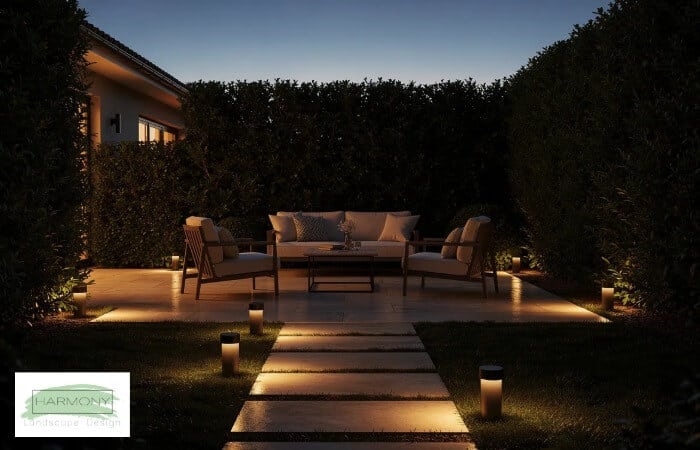
The image depicts a softly lit evening patio scene, where warm pathway lights illuminate a cozy seating area surrounded by dark silhouetted hedges, creating a secluded outdoor space that offers a sense of complete privacy. This private sanctuary is enhanced by thoughtful landscaping ideas, providing a tranquil atmosphere for relaxation.
Planning, Planting, and Maintaining Your Privacy Landscape
A phased approach over 1-3 years prevents costly mistakes. Impulse buying causes 20-30% plant failure rates – proper planning avoids this waste.
Step-by-Step Sequence
Year 1: Analysis and Hardscape
- Complete site analysis with photos and sketches
- Check local codes and HOA rules (fences typically capped at 42 inches front/72 inches rear)
- Create rough concept plans
- Install structural elements: fence, pergola, wall
Year 2: Major Plantings
- Plant trees and primary shrubs at 50-75% mature width spacing
- Amend soil with 2-4 inches compost (boosts establishment by 40%)
- Install drip irrigation delivering 1-2 gallons per plant hourly
Year 3: Infill and Refinements
- Add secondary plantings to fill gaps
- Apply 3-inch mulch layer (suppresses weeds 70%)
- Adjust irrigation based on plant establishment
Planting Guidelines
| Element | Guideline |
| Spacing | 50-75% of mature width |
| Soil prep | 2-4 inches compost incorporated |
| Irrigation | Drip lines for linear plantings |
| Mulch | 3 inches, renewed every 2 years |
Maintenance Expectations
Privacy landscaping requires ongoing care:
- Formal hedges: Annual shearing (spring and fall), 4-6 hours weekly per 100 linear feet
- Informal plantings: Selective pruning biannually
- Mulch: Renewal every couple of years to retain 90% soil moisture
- Plant replacement: Expect 10% replacement rate from stressors like Phytophthora root rot
Use proper pruning techniques to maintain plant health and shape. Over-pruning creates gaps while under-pruning leads to overgrown, unhealthy plants.
Frequently Asked Questions About Privacy Landscaping
How Long Does It Realistically Take to Get Full Privacy from Plants?
Most evergreen hedges need about 3-5 growing seasons to knit together into complete privacy screens. Very fast growing options like hybrid willow or some arborvitae varieties can provide substantial screening in 2-3 years when planted at proper spacing with 4-foot starter plants.
The practical approach combines temporary structures (panels, curtains, annual screens) with young trees and shrubs. This strategy delivers noticeable privacy within the first season while permanent plantings mature.
What Is the Approximate Cost of Privacy Landscaping Compared to Installing a Fence?
In 2026, installed privacy fences typically range from $30-120 per linear foot depending on material:
| Material | Cost Per Linear Foot |
| Pressure-treated pine | $30-60 |
| Cedar | $40-75 |
| Composite | $45-85 |
| Metal panels | $50-120 |
Planted hedges often cost $20-50 per linear foot initially but require ongoing maintenance adding $5-10 annually per foot. Get at least two local quotes for both options – labor and material prices vary significantly by region and lot access.
Can I Plant Right on the Property Line for Maximum Width Savings?
Many municipalities and HOAs require plants to be set back 1-3 feet from property lines, with stricter setbacks for fences and structures. Roots and branches legally cannot encroach on neighbors’ property – a source of 18% more neighbor disputes since 2024.
Before planting or digging posts:
- Call your local planning department
- Review recorded neighborhood covenants
- Speak with adjacent neighbors to avoid future conflicts
What Low-Maintenance Options Are Best If I Don’t Have Time to Prune Hedges?
Slower-growing evergreen shrubs maintain tidy natural shapes without frequent shearing:
- Compact arborvitae like Thuja ‘Degroot’s Spire’ (pruning every 3 years)
- Dwarf inkberry holly (Ilex glabra, self-shaping to 6 feet)
- Native shrub mixes requiring occasional thinning only
Pair these with durable structural elements like metal panels or a stone wall so overall privacy doesn’t depend on intensive hedge maintenance.
Is Bamboo a Good Idea for Privacy, or Is It Too Invasive?
Bamboo effectiveness depends entirely on species selection:
Clumping bamboo (Fargesia, Bashania): Stays contained with less than 3-foot spread, reaches 10-12 feet in one year, excellent in containers.
Running bamboo (Phyllostachys species): Spreads aggressively up to 50 feet annually, banned in 15 states including Hawaii and Connecticut, creates a living fence that becomes a neighborhood nightmare.
If using bamboo, plant clumping varieties in heavy-duty containers or beds with 50-mil HDPE barriers sunk 30 inches deep. Always check local regulations before planting.
Final Thoughts
Privacy landscaping transforms exposed yards into functional outdoor retreats. The best results combine structural elements for immediate impact with living screens that mature over time, providing multiple layers of protection against views, noise, and wind.
Start this weekend by walking your property with a camera. Document where you feel exposed, when during the day problems are worst, and what specific views need blocking. That assessment becomes your plan for creating a private, secluded retreat that enhances both your daily enjoyment and your property’s long-term value.
Explore the great ideas in this guide, adapt them to your climate and space, and remember: the best privacy landscape is one you’ll actually maintain. Choose solutions that match your time, budget, and commitment level – whether that’s a formal hedge requiring regular care or a low-maintenance combination of metal panels and native shrubs that largely care for themselves.
Ready to Transform Your Outdoor Space?
Don’t wait to create the private sanctuary you deserve. Whether you’re starting from scratch or enhancing existing landscaping, our expert team at Harmony Landscape Design is here to help you craft the perfect privacy landscaping solution tailored to your needs. Explore our services, get inspired by great ideas, and schedule your consultation today. Make your outdoor spaces more secluded, beautiful, and enjoyable with Harmony Landscape Design!
Written by: Shir Amram

Shir Amram is the Founder and Lead Landscape Designer at Harmony Landscape Design. She specializes in modern landscape design, 3D outdoor renderings, planting plans, and full-property planning for homeowners nationwide. Her design process helps clients visualize their outdoor space before construction begins, creating clarity and confidence in every project.